Ever gazed upon a recipe calling for a “large pot” and thought, “My largest still isn’t large enough“? Then it’s time to talk about the unsung hero of industrial-scale home cooking and professional kitchens alike: the 60-quart stock pot. This behemoth isn’t just a piece of cookware; it’s a statement, a workhorse, and an indispensable tool for anyone serious about creating culinary masterpieces in generous quantities. It’s the kind of pot that makes a true impact, transforming ambitious recipes into achievable feasts.
What Exactly is a 60-Quart Stock Pot?
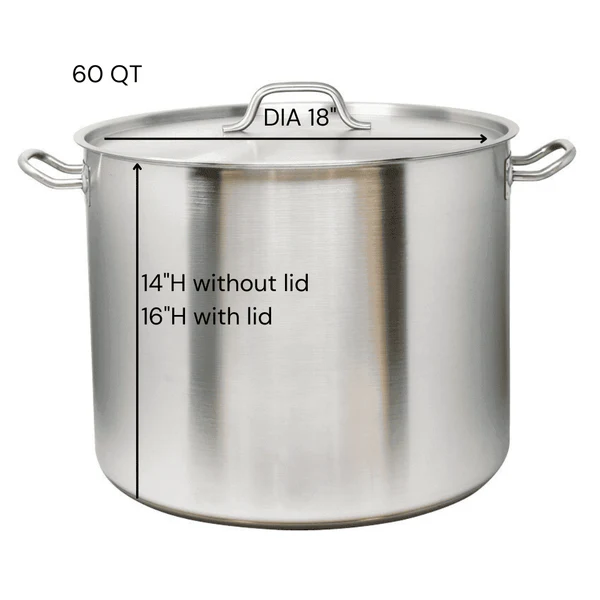
At its core, a stock pot is a tall, cylindrical vessel with a wide base and often two sturdy helper handles, designed to hold substantial volumes of liquid. When we talk about a 60-quart (or 60 qt) stock pot, we’re talking about a culinary colossus capable of holding a staggering 15 gallons! This isn’t your average weeknight soup pot; this is equipment for serious undertakings—think brewing, large-batch canning, catering, or feeding a small army. Its immense capacity and high walls are perfectly engineered for simmering stocks for hours, boiling huge amounts of pasta, or preparing epic seafood boils without fear of overflow.
A Glimpse into the History and Evolution of the Stock Pot
While the exact “birthdate” of the stock pot as we know it is hard to pinpoint, large cooking vessels have been central to human civilization for millennia. From ancient earthenware pots used over open fires to the heavy cast iron cauldrons of medieval kitchens, the need for large pots to feed communities, preserve food, and brew beverages has always existed. The modern stock pot, with its refined materials and specialized design, is the culmination of centuries of culinary innovation. It evolved from basic utilitarian cookware into the highly efficient, heat-distributing vessels we rely on today, making large-scale cooking more accessible and manageable than ever before.
Choosing Your Culinary Colossus: Materials and Types of 60-Quart Stock Pots
When you’re investing in a piece of equipment as significant as a 60-quart stock pot, the material it’s made from is paramount. Each material offers distinct advantages for different cooking styles and needs.
- Aluminum Stock Pots: These are incredibly popular for 60-quart capacities, largely due to aluminum’s exceptional heat conductivity and relatively lighter weight compared to other metals. Many commercial-grade and outdoor cooking stock pots, like those from Chard or Bayou Classic, are made from heavy-gauge, reinforced aluminum. Aluminum heats up quickly and evenly, which is crucial for such a large vessel, preventing hot spots and ensuring consistent cooking. It’s also often more budget-friendly. However, raw aluminum can react with acidic foods, so it’s typically best for boiling water, steaming, or making non-acidic stocks. Look for thicker gauges (like 4mm or 6mm) for superior durability and dent resistance. [cite: 1, 2 of uses, 1, 2 of best 60 qt, 1 of material comparison]
- Stainless Steel Stock Pots: For durability, non-reactivity, and a sleek appearance, stainless steel is a top contender. High-quality stainless steel, often 18/10, is non-corrosive and won’t impart metallic flavors to your food, making it ideal for long-simmered sauces, broths, and acidic preparations. While stainless steel itself isn’t the best conductor of heat, many premium stainless steel stock pots feature an encapsulated or impact-bonded base with an aluminum or copper core. This design leverages the superior conductivity of aluminum for even heating across the bottom, combined with the inertness and durability of stainless steel for the cooking surface and sides. Brands like Princess House offer stainless steel options for large capacities. [cite: 3 of uses, 3 of material comparison]
- Enamel on Steel/Carbon Steel Stock Pots: Less common at the 60-quart size but still available, these pots combine the responsiveness of carbon steel with a vibrant, easy-to-clean porcelain enamel coating. They offer good heat retention and are non-reactive, making them a colorful addition to some kitchens. However, the enamel can be prone to chipping if not handled carefully. [cite: 4 of uses, 3 of material comparison]
Regardless of the material, look for features like heavy-duty riveted side handles for secure lifting and transport, and a vented, domed lid that allows steam to escape while preventing vapor lock, especially useful during vigorous boiling. Many also come with perforated strainer baskets, transforming them into versatile steamers or boilers for seafood. [cite: 1, 2, 4 of uses]
Finding the Perfect Fit: How to Select Your 60-Quart Stock Pot
Choosing the right 60-quart stock pot isn’t just about capacity; it’s about matching the pot to your lifestyle and cooking environment.
- Consider Your Needs: Are you primarily canning large batches of preserves, brewing beer, making stock for a restaurant, or hosting massive family gatherings? Your primary use case will heavily influence your material choice and preferred features like a strainer basket.
- Stove Compatibility: A 60-quart pot is enormous, and not all home stovetops can handle its size and weight, especially when full. Ensure your stovetop (gas, electric, induction) can safely and effectively heat such a large vessel. Induction-ready pots will specify this in their description. Many opt for outdoor propane burners for pots this size.
- Dimensions and Storage: These pots are typically around 15-17 inches in diameter and 17-19 inches in height. [cite: 1, 4 of uses, 1 of material comparison] Do you have the storage space? And perhaps more importantly, do you have a sink large enough to wash it?
- Handles and Lid: Reinforced, riveted handles are a non-negotiable for safety when dealing with such weight. A well-fitting lid is essential for controlling evaporation and heat. Some 60 qt pots are sold without lids to reduce cost, so double-check what’s included.
“When you’re working with a 60-quart stock pot, safety is paramount,” advises Chef Elena Petrova, a renowned culinary expert in large-scale event catering. “Always ensure your handles are robustly riveted and that you have a secure, flat surface to cook on. And never try to lift it alone when full!”
Beyond the Broth: The Multifaceted Uses of a 60-Quart Stock Pot
The 60-quart stock pot is far more than just a soup pot. Its generous volume unlocks a world of culinary possibilities, making it an indispensable tool for certain tasks.
Making Epic Stocks and Soups
This is, of course, where the stock pot truly shines. Its tall, narrow design minimizes evaporation, allowing liquids to bubble up through the ingredients, extracting maximum flavor for rich, concentrated stocks, bone broths, and hearty soups. You can make enough to freeze and enjoy for months! [cite: 2, 5 of uses]
Feast-Sized Stews and Chilies
Planning a community event or a huge family reunion? A 60-quart stock pot is perfect for simmering massive quantities of chili, gumbos, or stews, allowing flavors to meld beautifully over slow cooking times.
Boiling & Steaming for a Crowd
Need to cook pounds of pasta for a party? Or perhaps a massive seafood boil with crab, shrimp, and corn on the cob? This pot can handle it all, providing ample space for even cooking. With a steamer basket, it becomes a fantastic way to steam large amounts of vegetables or tamales. [cite: 1, 3, 5 of uses]
Home Canning & Preserving
For dedicated home canners, a 60-quart stock pot can double as a water bath canner, sterilizing jars and processing a large number of preserves efficiently. This is a game-changer for harvesting seasonal produce. [cite: 5 of uses]
Brewing and Other Specialty Uses
Many home brewers rely on 60-quart aluminum stock pots for boiling wort, the liquid base for beer. Its ample size accommodates the volume needed for a full batch, while the even heating ensures a consistent boil. It’s also ideal for reducing large volumes of liquids. [cite: 1, 2 of uses]
Mastering Your Giant: Tips for Optimal Use and Performance
Working with a 60-quart stock pot requires a slightly different approach than your average saucepan.
- Heat Gradually: Due to its size, a 60-quart pot takes longer to heat up. Start with medium heat and allow it to come to temperature slowly to ensure even heating and prevent scorching.
- Mind the Fill Line: Never fill a stock pot completely to the brim, especially when boiling. Leave adequate headspace to prevent dangerous boilovers.
- Safety First: Always use two hands and, ideally, have assistance when moving a full 60-quart pot. Its weight can be considerable. Ensure it’s on a stable, heat-resistant surface.
- Lid Management: A vented lid helps manage steam and pressure during long simmers or vigorous boils.
Longevity in the Kitchen: Care and Cleaning for Your 60-Quart Stock Pot
Keeping your 60-quart stock pot in top condition ensures years of reliable service.
- Hand Wash Recommended: Given its size, hand washing is almost always the practical—and often recommended—method. Use warm, soapy water and a non-abrasive sponge or cloth. For stubborn residue, soaking can help.
- Avoid Harsh Cleaners: Skip abrasive scouring pads or harsh chemical cleaners, especially on aluminum, as they can damage the surface.
- Thorough Drying: Dry the pot completely after washing to prevent water spots and, for aluminum, to avoid potential oxidation.
- Proper Storage: Store it in a designated spot where it won’t be easily damaged or tip over. Its size means it will command its own space.
The Smart Investment: Why a Quality 60-Quart Stock Pot is Worth It
While a 60-quart stock pot might seem like a niche item, for the right cook, it’s an invaluable investment. It represents efficiency in large-scale meal preparation, durability that withstands heavy use, and the versatility to tackle a wide array of ambitious culinary projects. For those who cook for crowds, preserve the harvest, or craft homemade beverages, this pot isn’t just a convenience—it’s an enabler of passion and a cornerstone of productive kitchens. It allows you to produce quality and quantity that smaller pots simply cannot.
60-Quart Stock Pot vs. Other Large Pots: What’s the Difference?
While there are many large pots out there, the 60-quart stock pot has its distinct characteristics.
- Smaller Stock Pots: A 12-quart or 20-quart stock pot is great for family meals, but a 60-quart dwarfs them in capacity, making it suitable for significantly larger batches.
- Dutch Ovens: Dutch ovens, even large ones (up to 12-15 quarts), are typically wider and shorter than stock pots, designed for braising, roasting, and often oven use. A 60-quart stock pot’s height is optimized for liquids and volume reduction.
- Multi-Cookers: These are often electric and much smaller, offering convenience for everyday tasks but lacking the sheer volume and robust construction of a 60-quart stock pot.
“A 60-quart stock pot is in a league of its own,” explains Dr. Arthur Peterson, a food science researcher and avid home brewer. “Its unique dimensions are optimized for maximum liquid capacity and efficient heat transfer for processes like brewing or large-scale broth making, where volume and sustained heat are critical.”
Frequently Asked Questions (FAQ)
How much does a 60-quart stock pot weigh when full?
A 60-quart stock pot, depending on its material, can weigh anywhere from 10-20 lbs empty. When filled with water (60 quarts is about 15 gallons, and a gallon of water weighs roughly 8.34 lbs), the contents alone will weigh over 125 lbs. So, a full 60-quart stock pot can easily weigh 135-145 lbs or more. Always exercise extreme caution and seek assistance when moving.
Can a 60-quart stock pot be used on a regular home stove?
While technically possible, using a 60-quart stock pot on a regular home stove can be challenging and potentially unsafe. It’s often too large for burner grates, can impede access to other burners, and its weight when full can exceed the stove’s capacity. Many culinary professionals and serious home cooks opt for outdoor propane burners or commercial-grade stoves for a pot of this size.
What are the best materials for a 60-quart stock pot?
For general-purpose boiling, steaming, and brewing, heavy-gauge aluminum is often preferred for its excellent heat conduction and lighter weight. For acidic foods, long-simmered broths, or if you prefer a non-reactive surface, heavy-duty stainless steel (especially with an aluminum-clad base) is an excellent choice.
Is a lid always included with a 60-quart stock pot?
No, not always. Some 60-quart stock pots, particularly those geared towards commercial or outdoor use, may be sold without a lid to keep costs down. It’s crucial to check the product description to confirm if a lid is included or if it needs to be purchased separately.
How do you store such a large pot?
Storing a 60-quart stock pot requires dedicated space. Many commercial kitchens hang them or place them on large, open shelving units. In a home setting, you might need to clear out a deep pantry shelf, store it in a utility room, or keep it with other outdoor cooking equipment.
Embrace the Grandeur of the 60-Quart Stock Pot
The 60-quart stock pot stands as a testament to ambition in the kitchen. It’s a tool that empowers you to think bigger, cook bolder, and create culinary experiences that truly impress. Whether you’re crafting gallons of rich bone broth, boiling hundreds of ears of corn for a community event, or venturing into home brewing, this substantial piece of cookware is designed to perform. Investing in a quality 60-quart stock pot isn’t just buying a pot; it’s acquiring a symbol of culinary dedication and a gateway to a whole new level of cooking efficiency and capability. Get ready to elevate your kitchen game and embrace the grandeur of large-scale cooking!