Every home chef dreams of a kitchen tool that simplifies the cooking process, turns sticky situations into smooth successes, and truly inspires culinary creativity. When it comes to simmering rich stocks, boiling a mountain of pasta, or crafting hearty stews, the humble stock pot often takes center stage. But what if you could have all that versatility with the added bonus of effortlessly release and cleanup? Enter the non-stick stock pot, a true game-changer designed to elevate your cooking experience. Finding the best non-stick stock pot isn’t just about avoiding sticky food; it’s about investing in efficiency, health, and pure cooking joy. This guide will navigate you through the world of these essential kitchen vessels, helping you choose the perfect one for your culinary adventures.
What Exactly is a Stock Pot?
At its core, a stock pot is a large, deep pot with a wide mouth, designed primarily for cooking large volumes of liquid. Think simmering bone broth for hours, boiling corn on the cob, or preparing enough chili to feed a crowd. Its tall sides minimize evaporation, making it ideal for reducing liquids and locking in flavors. When you add a non-stick coating to this workhorse, you unlock a new level of convenience, preventing ingredients like starches, sauces, and even delicate fish from adhering to the surface, transforming tedious cleanup into a quick wipe.
A Brief Journey Through Stock Pot Evolution
Stock pots have been kitchen staples for centuries, evolving from simple cast-iron cauldrons over open flames to the sophisticated, multi-clad designs we see today. Historically, they were purely utilitarian, built for durability and heat retention. The advent of non-stick technology in cookware revolutionized how we approach cooking and cleaning. What started as a niche feature for frying pans soon found its way into larger vessels, addressing common cooking frustrations and making the stock pot even more indispensable in modern kitchens.
Unpacking the Best Non-Stick Stock Pot Materials
When you’re searching for the best non-stick stock pot, understanding the different materials and coatings is crucial. Each offers unique benefits and considerations.
Ceramic Non-Stick Stock Pots
These pots typically feature a mineral-based ceramic coating, often praised for being free from PFOA and PTFE, which are chemicals sometimes found in traditional non-stick surfaces. Brands like Xtrema and certain Le Creuset lines offer ceramic options. They provide excellent food release and often come in attractive colors. The key to their longevity is usually lower heat cooking and careful handling, as extreme temperatures or abrasive utensils can diminish their non-stick properties over time.
Hard-Anodized Aluminum with Non-Stick Coatings
Hard-anodized aluminum is a fantastic base material for non-stick stock pots. The anodizing process creates a dense, non-porous surface that is harder than stainless steel, making the pot incredibly durable and resistant to scratches. This material also boasts excellent heat conductivity, ensuring even heating across the base and up the sides. A non-stick coating is then applied to this robust surface. Cuisinart’s Chef’s Classic line often utilizes this construction, offering a potent combination of strength and effortless food release.
Hybrid Non-Stick Stock Pots
For those who want the best of both worlds – the searing capabilities of stainless steel and the easy release of non-stick – hybrid designs are a revelation. HexClad is a prime example, featuring a unique laser-etched design with a stainless steel hexagonal pattern surrounding non-stick valleys. This allows for excellent heat transfer and durability with metal utensils while still offering significant non-stick performance. These pots are often celebrated for their robust construction and professional feel, making them a strong contender for the best non-stick stock pot for serious cooks.
“A truly great non-stick stock pot isn’t just about preventing sticking; it’s about giving you the confidence to cook everything from delicate risottos to rich, tomato-based sauces without a second thought about cleanup,” shares Chef Elise Dubois, a renowned culinary expert. “It’s a foundational piece that empowers creativity.”
Finding Your Perfect Match: How to Choose a Non-Stick Stock Pot
Selecting the ideal non-stick stock pot involves more than just picking a pretty color. Consider these factors to ensure it meets your specific cooking needs.
Size and Capacity: How Much Do You Cook?
Stock pots come in various capacities, typically ranging from 6-quart models perfect for smaller families or meal prepping, to massive 16-quart or even larger pots for big family gatherings, canning, or serious batch cooking. Consider your average cooking volume. Do you mostly make soups for two, or do you prepare large quantities of pasta for a party? An 8 to 10-quart size is often considered a versatile sweet spot for most households.
Stovetop Compatibility: What’s Your Heat Source?
Before you buy, confirm that the stock pot is compatible with your stovetop. Most non-stick stock pots work on gas and electric ranges. If you have an induction cooktop, ensure the pot has an induction-compatible base, typically made from magnetic stainless steel.
Handle Design: Comfort and Safety
Ergonomic, securely riveted handles are essential, especially when dealing with a heavy pot full of liquid. Look for handles that are comfortable to grip, stay cool on the stovetop (or are oven-safe if you plan to transfer the pot), and provide a safe, stable grip for pouring and lifting.
Lid Fit: Seal in the Flavor
A tight-fitting lid is crucial for a stock pot. It traps steam, prevents excessive evaporation, and ensures flavors infuse properly. Glass lids are a popular choice as they allow you to monitor your cooking without lifting the lid, releasing heat and steam.
Durability & Warranty: An Investment for Years
A quality non-stick stock pot is an investment. Look for sturdy construction, often indicated by the weight and feel of the pot. A good warranty can also speak volumes about a manufacturer’s confidence in their product’s longevity. While no non-stick coating lasts forever, a well-made pot with a reliable coating should provide years of service with proper care.
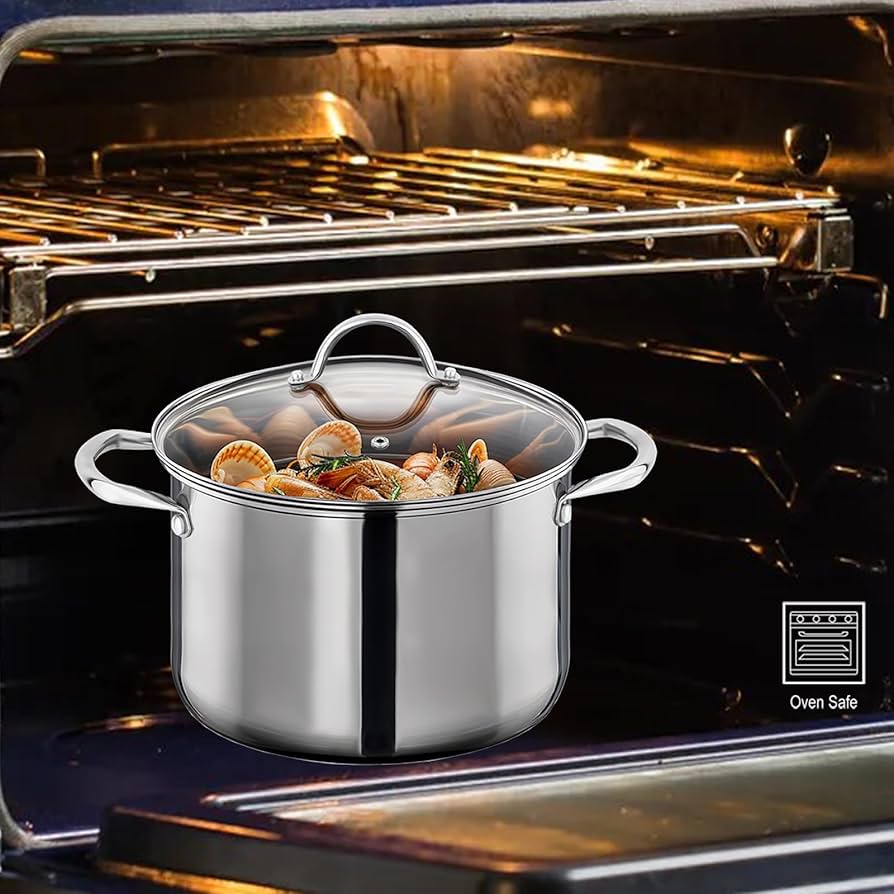
Oven Safety: Adding Versatility
Many non-stick stock pots are oven-safe up to certain temperatures (e.g., 350°F to 500°F). This feature adds tremendous versatility, allowing you to start a stew on the stovetop and finish it in the oven, or keep food warm before serving. Always check the manufacturer’s specifications for oven-safe temperatures.
Beyond Basics: The Versatile World of Your Non-Stick Stock Pot
While the name suggests “stock,” your non-stick stock pot is a true kitchen multi-tasker.
- Soups & Stocks: Its primary function. The non-stick surface makes whisking thickeners like roux or simmering tomato-based stocks a breeze, preventing scorching and sticking.
- Pasta & Grains: No more sticking pasta to the bottom! Boil large batches of noodles or cook grains like rice and quinoa without fear of them clinging to the pot.
- Stews & Chilis: Brown your meats and vegetables directly in the pot, then add liquids and simmer for hours. The non-stick surface facilitates easy deglazing and minimizes cleanup.
- Braising & Slow Cooking: For oven-safe models, a non-stick stock pot can transform into an excellent braiser, tenderizing cuts of meat to perfection.
- Boiling & Blanching: Ideal for blanching vegetables, boiling crabs or lobster, or even making large batches of homemade jams and jellies.
Maximizing Performance: Tips for Using Your Non-Stick Stock Pot
To get the most out of your best non-stick stock pot, a few simple practices go a long way.
- Use Low to Medium Heat: Non-stick coatings perform optimally at these temperatures. High heat can damage the coating over time and is rarely necessary for stock pot tasks.
- Choose the Right Utensils: Silicone, wooden, or plastic utensils are your best friends. Metal utensils can scratch and compromise the non-stick surface.
- Don’t Overcrowd: Give your ingredients space. Overcrowding can lower the temperature and lead to steaming rather than simmering or browning, which can sometimes result in uneven cooking or sticking.
- Avoid Thermal Shock: Let your hot pot cool down before washing it. Plunging a hot non-stick pot into cold water can warp the metal and potentially damage the coating.
Longevity & Luster: Caring for Your Non-Stick Stock Pot
Proper care is paramount for extending the life of any non-stick cookware.
- Handwashing is King: While some non-stick pots are technically dishwasher safe, handwashing is almost always recommended. Dishwasher detergents can be abrasive and hasten the breakdown of non-stick coatings. Use warm, soapy water and a soft sponge or cloth.
- Gentle Cleaning: For any stubborn bits, soak the pot for a few minutes before gently scrubbing. Avoid abrasive scouring pads or harsh chemicals.
- Smart Storage: Protect the non-stick interior from scratches. If stacking, place a paper towel, cloth, or pot protector between your stock pot and other cookware.
- Re-seasoning (for some types): Some ceramic or hybrid non-stick surfaces might benefit from occasional re-seasoning, which typically involves rubbing a small amount of cooking oil into the clean, dry surface over low heat. Always check the manufacturer’s instructions.
Why Invest in a Quality Non-Stick Stock Pot?
Beyond the obvious benefit of food not sticking, a quality non-stick stock pot offers several compelling advantages:
- Effortless Cleanup: This is perhaps the biggest draw. A quick rinse and wipe are often all it takes, saving you time and effort.
- Healthier Cooking: You can often use less oil or butter, as food won’t seize to the surface, supporting healthier meal preparation.
- Versatility: From savory stocks to sweet jams, a good non-stick stock pot handles a wide array of recipes with grace.
- Enhanced Flavor: Even heating and precise temperature control contribute to better flavor development in your dishes.
- Long-Term Value: A well-cared-for non-stick stock pot will be a reliable ally in your kitchen for many years, proving its worth over countless meals.
Non-Stick Stock Pot vs. The Rest: A Quick Look
While stainless steel stock pots are lauded for their durability and cast iron for their incredible heat retention, the non-stick stock pot carves its own niche.
- Vs. Stainless Steel: Stainless steel is extremely durable and can withstand metal utensils, but food can stick easily, making cleanup more challenging for certain dishes. Non-stick excels in preventing adhesion and simplifying washing.
- Vs. Cast Iron: Cast iron offers unparalleled heat retention and can develop a natural non-stick patina over time. However, it’s very heavy, requires specific seasoning, and reacts with acidic foods. Non-stick stock pots are lighter, easier to handle, and provide instant non-stick convenience without the specific maintenance.
Expert’s Corner: Insights from Chef Elise Dubois
“For chefs and home cooks alike, the best non-stick stock pot is a foundation for culinary success. It’s not just about convenience; it’s about confidence in your cooking, knowing that your sauces won’t scorch and your grains will release perfectly. This allows you to focus purely on the art of flavor.”
Frequently Asked Questions
Are non-stick stock pots safe to use?
Yes, modern non-stick stock pots from reputable brands are generally considered safe. Many now feature PFOA/PTFE-free coatings, and when used according to manufacturer instructions (especially avoiding extreme high heat), they pose no health risks.
How long do non-stick stock pots typically last?
The lifespan of a non-stick stock pot varies greatly depending on the quality of the coating, frequency of use, and adherence to care instructions. High-quality pots can last several years, while cheaper ones might show wear within a year or two. Proper care significantly extends their life.
Can I put my non-stick stock pot in the oven?
Many non-stick stock pots are oven-safe, but the maximum temperature varies by brand and material. Always check the manufacturer’s instructions before placing your pot in the oven to avoid damaging the non-stick coating or handles.
What size non-stick stock pot should I buy?
For general home cooking, an 8 to 10-quart non-stick stock pot is a versatile choice, suitable for family meals, soups, and pasta. If you cook for larger crowds or engage in batch cooking and canning, a 12 to 16-quart (or larger) pot would be more appropriate.
How do I re-season a non-stick stock pot?
Traditional non-stick coatings typically cannot be “re-seasoned” in the same way cast iron can. However, some ceramic or hybrid non-stick surfaces may benefit from occasional light oiling (as per manufacturer instructions) to maintain performance. If your coating is damaged, it usually cannot be repaired.
The Heart of a Well-Equipped Kitchen
In the grand symphony of kitchen essentials, a high-quality non-stick stock pot plays a crucial, harmonious role. It’s the silent workhorse that supports countless culinary endeavors, from the simplest weeknight pasta to the most elaborate holiday feast. By choosing the best non-stick stock pot for your needs, you’re not just buying a piece of cookware; you’re investing in ease, efficiency, and a newfound freedom to explore your passion for cooking. Embrace the joy of effortless cooking and cleanup, and let your non-stick stock pot inspire your next delicious creation.