Step into any bustling professional kitchen, from a Michelin-starred restaurant to a thriving catering operation, and you’ll quickly notice the unsung hero, the true workhorse, silently simmering away: the Commercial Stock Pot. More than just a large pot, it’s the foundation upon which countless culinary masterpieces are built, a crucible of flavor that dictates the efficiency and quality of your large-batch cooking. Understanding its nuances is crucial for any chef or kitchen manager looking to enhance their operation’s potential and ensure every dish starts with the finest ingredients.
What Exactly is a Commercial Stock Pot?
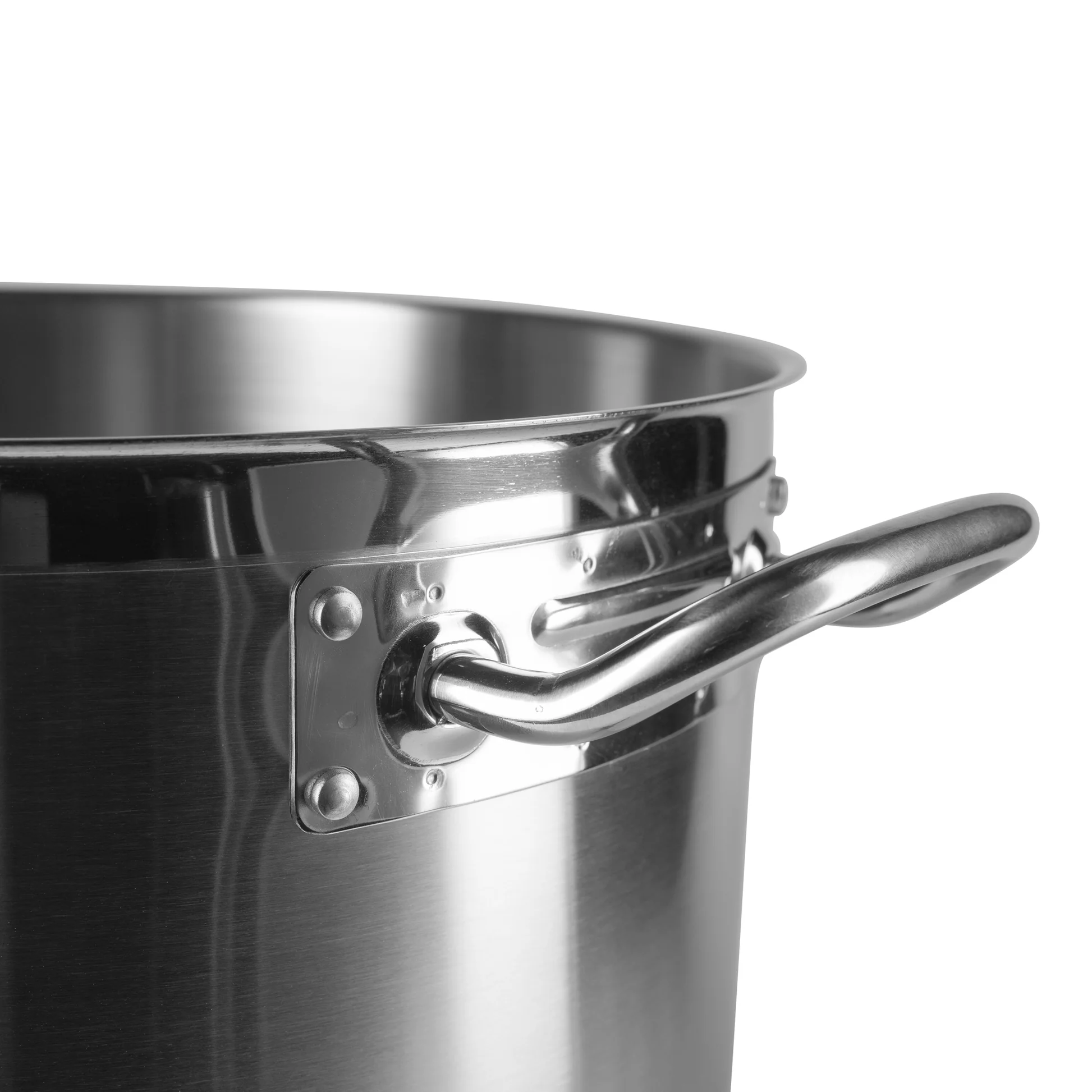
A commercial stock pot is a specialized, heavy-duty cooking vessel designed specifically for the rigorous demands of professional kitchens. Unlike its home-use counterpart, which typically serves family-sized portions, a commercial stock pot boasts significantly larger capacities, ranging from 12 quarts to well over 100 quarts. It is constructed from robust materials, engineered for superior heat distribution, unwavering durability, and the ability to withstand constant, high-volume use, making it indispensable for preparing stocks, soups, stews, and other bulk liquid preparations.
The Enduring Legacy: A Brief History of Stock Pots in Professional Culinary Arts
The concept of a large pot for simmering liquids has existed for centuries, evolving from simple clay or cast-iron vessels over open fires. However, the commercial stock pot as we know it today truly took shape with the advent of professional kitchens and the need for standardized, efficient, and sanitary cooking methods. Industrialization brought about improved metallurgy, leading to the development of durable stainless steel and aluminum pots. This evolution transformed the stock pot from a rudimentary tool into a high-performance piece of equipment, critical for the consistent quality and scale required in modern culinary arts. It became the bedrock for the foundational flavors that define professional cooking.
Decoding the Materials: Common Types of Commercial Stock Pots
The material of a commercial stock pot significantly impacts its performance, durability, and suitability for different tasks. Choosing wisely means matching the pot’s characteristics to your kitchen’s specific needs and heat sources.
Stainless Steel Commercial Stock Pots: The Workhorse of the Kitchen
Stainless steel is arguably the most popular material for commercial stock pots, and for good reason. Its non-reactive surface means it won’t impart metallic flavors to delicate stocks or sauces, and it’s remarkably easy to clean, resisting stains and corrosion. These pots are exceptionally durable, capable of enduring the demanding environment of a busy kitchen for years. While stainless steel itself isn’t the best heat conductor, quality commercial models often feature an encapsulated aluminum or copper base, which significantly improves heat distribution and makes them induction-compatible.
Aluminum Commercial Stock Pots: The Heat Maestro
For sheer heat conductivity, aluminum reigns supreme. It heats up quickly and evenly, making it an excellent choice for tasks where precise temperature control and rapid heating are crucial. Aluminum stock pots are also generally lighter than their stainless steel counterparts and often more affordable. However, bare aluminum can react with acidic foods, potentially imparting an off-flavor and discoloration. Many commercial aluminum pots are anodized or feature a non-stick coating to mitigate this issue. They are often a top choice for gas ranges where their excellent conductivity shines.
Other Materials: Niche Choices for Specific Needs
While less common for very large commercial stock pots, you might encounter specialty options. Cast iron, known for its incredible heat retention, is sometimes used for smaller, dedicated braising or stew pots. Copper, prized for its unmatched heat conductivity and responsiveness, is typically reserved for high-end, specialized tasks due to its cost and maintenance requirements.
Choosing Your Culinary Champion: How to Select the Perfect Commercial Stock Pot
Selecting the right commercial stock pot is a strategic decision that impacts everything from efficiency to consistency. It’s not just about size; it’s about understanding the synergy between material, construction, and your kitchen’s operational flow.
Size and Capacity: Matching Your Kitchen’s Demands
“A commercial stock pot isn’t just a vessel; it’s the heart of efficiency for any professional kitchen. Investing in a high-quality one is investing in consistency and capacity,” says Chef Elena Rodriguez, a veteran culinary director. The capacity of your stock pot should directly correlate with your menu, the volume of food you produce, and your storage capabilities. Restaurants with high demand for daily stocks or large batches of soup might opt for 60 to 100-quart pots, while smaller establishments or those with limited daily needs might find a 20 to 40-quart pot more appropriate. Always consider future growth and the ability to scale your operations.
Heat Source Compatibility: Induction, Gas, Electric
Ensure your chosen stock pot is compatible with your kitchen’s heat source. If you’re running an induction kitchen, you’ll need a pot with a magnetic base, typically stainless steel with an encapsulated bottom. Aluminum pots are generally not induction compatible unless specifically designed with a ferromagnetic plate. For gas and electric coil stoves, both stainless steel and aluminum options work well, though aluminum’s rapid heat transfer is particularly noticeable on gas.
Construction and Durability: Built to Last
“For busy kitchens, the durability of a commercial stock pot is paramount. Look for thick-gauge materials and riveted handles – they’re the unsung heroes that prevent costly mishaps,” advises Mark Thompson, a renowned culinary equipment specialist. Commercial stock pots are an investment, so look for heavy-gauge materials that resist denting and warping. Thick bottoms, especially encapsulated ones, are crucial for even heat distribution, preventing hot spots that can scorch food. Handles should be robust and securely riveted, not spot-welded, ensuring they can safely support the pot’s weight when full.
Essential Features for Commercial Use
Beyond the basics, certain features can significantly enhance functionality. Tight-fitting lids are essential for minimizing evaporation and retaining heat. Some very large commercial stock pots include spigots for easy dispensing of liquids, while internal volume markings can streamline recipe scaling. NSF certification is a seal of approval, indicating that the pot meets strict public health and safety standards for construction and cleanability.
Beyond Broth: The Multipurpose Marvel of a Commercial Stock Pot
While “stock pot” implies its primary use, this versatile vessel is capable of so much more in a professional kitchen. Its large capacity and sturdy construction make it indispensable for a wide range of culinary applications.
- Broths and Stocks: This is, of course, its signature role. Producing rich, flavorful broths for soups, sauces, and reductions in significant quantities is where the commercial stock pot truly shines.
- Hearty Soups and Stews: From classic French onion to robust chili, a commercial stock pot allows chefs to simmer large batches of comfort food to perfection, developing deep flavors over hours.
- Boiling Pasta and Blanching Vegetables: High-volume kitchens rely on stock pots to quickly boil massive amounts of pasta or efficiently blanch vegetables, ensuring consistent texture and vibrant color.
- Seafood Boils and Braising: For culinary events or seafood-focused restaurants, a commercial stock pot is perfect for a classic seafood boil. Its depth also makes it suitable for braising larger cuts of meat for extended periods, though a brazier might be preferred for broader searing.
- Sauces and Reductions: While often started in shallower pots, large quantities of rich sauces and complex reductions can be finished and held in a commercial stock pot, benefiting from its even heat and ample capacity.
Mastering the Heat: Tips for Optimal Commercial Stock Pot Performance
Achieving culinary excellence with your commercial stock pot involves more than just filling it up and turning on the heat. Smart usage can significantly impact the quality of your output and the longevity of your equipment.
- Preheat Properly: Especially with stainless steel pots with encapsulated bases, allowing the pot to preheat gently before adding ingredients can ensure more even cooking and prevent sticking.
- Manage Heat Zones: If your stovetop has different heat zones, strategically place your stock pot to leverage them. For example, a rolling boil might be needed initially, followed by a gentle simmer.
- Use the Right Lid: A tight-fitting lid is crucial for retaining heat and moisture, speeding up cooking times, and minimizing evaporation, especially when making stocks or reducing liquids.
- Avoid Overcrowding: While commercial stock pots are designed for large volumes, overcrowding can lower the liquid temperature too much, prolong cooking times, and negatively impact the texture and flavor of ingredients.
Preserving Your Investment: Care and Maintenance for Longevity
A commercial stock pot is a significant investment. Proper care and maintenance are essential to ensure its longevity, maintain hygiene standards, and guarantee consistent performance for years to come.
- Cleaning Techniques: After each use, empty the pot and remove any large food particles. For stainless steel, a warm, soapy water wash is usually sufficient. For stubborn residue, try soaking or using a non-abrasive scrubber. Avoid steel wool or harsh chemical cleaners, which can scratch the surface or damage finishes. Aluminum pots should be cleaned promptly to prevent pitting.
- Proper Storage: Ensure pots are completely dry before storing to prevent water spots or corrosion. Stack them carefully, ideally with protective layers between them to avoid scratches and dings, especially if they have delicate encapsulated bases.
- Addressing Discoloration: Stainless steel can sometimes develop “heat tint” or rainbow discoloration, which is harmless and can often be removed with a vinegar solution or specialized stainless steel cleaner. Aluminum may darken over time with certain foods; this is normal and doesn’t affect performance.
Why Invest in a Quality Commercial Stock Pot? The ROI for Your Kitchen
The decision to invest in a high-quality commercial stock pot yields substantial returns for any professional kitchen. It’s an investment in efficiency, consistency, and ultimately, the reputation of your culinary offerings.
- Efficiency Gains: Large capacity means fewer batches, freeing up valuable staff time and reducing energy consumption. It allows for bulk preparation that can be used throughout the week.
- Consistent Results: Superior heat distribution and durable construction lead to more predictable cooking outcomes, ensuring your stocks and soups taste the same every time, a cornerstone of culinary excellence.
- Durability Reduces Replacement Costs: A well-made commercial stock pot is built to last, significantly extending its lifespan compared to cheaper alternatives. This reduces the frequency and cost of replacement, saving your business money in the long run.
- Enhanced Food Quality: “Don’t underestimate the power of even heat distribution, especially in a large commercial stock pot. An encapsulated base is a game-changer for everything from delicate broths to robust stews,” explains Dr. Anya Sharma, a food science expert. This directly translates to better-tasting food, a critical factor for customer satisfaction and loyalty.
Stock Pot vs. The Rest: A Quick Comparison for Commercial Cookware
While many pots serve similar purposes, understanding the distinctions helps in equipping your kitchen optimally.
- Commercial Stock Pot vs. Sauce Pot: Stock pots are typically taller and narrower, designed for simmering large volumes of liquid with minimal evaporation. Sauce pots are shallower and wider, ideal for reducing sauces, making gravies, or cooking smaller batches where broader surface area is beneficial.
- Commercial Stock Pot vs. Brazier: A brazier (or rondeau) is a wide, relatively shallow pot with straight sides, designed for searing large cuts of meat and then braising them. Its wide base maximizes contact with the heat source for browning, a function less optimized for the tall, narrow stock pot.
- Commercial Stock Pot vs. Soup Pot: Often, “soup pot” is used interchangeably with smaller stock pots. However, a dedicated commercial stock pot typically denotes a larger capacity and heavier-duty construction than what might be labeled a general “soup pot,” emphasizing its primary role in foundational liquid preparations.
FAQ: Your Commercial Stock Pot Questions Answered
What capacity commercial stock pot do I need for a small restaurant?
For a small restaurant, a 20 to 40-quart commercial stock pot is often sufficient. This allows for preparing moderate batches of stocks, soups, and sauces without overwhelming your stovetop space.
Is stainless steel or aluminum better for a commercial stock pot?
It depends on your priority. Stainless steel offers durability, non-reactivity, and ease of cleaning, especially with an encapsulated base for even heating. Aluminum excels in heat conductivity and is lighter, but can be reactive with acidic foods.
How do I prevent food from sticking to my commercial stock pot?
Proper preheating is key. For stainless steel, heat the pot first, then add oil or fat before ingredients. For soups and stocks, stir regularly, especially if simmering for extended periods, and ensure adequate liquid levels.
Can I use a commercial stock pot on an induction cooktop?
Only if the commercial stock pot has a magnetic base, typically found in stainless steel models with an encapsulated bottom containing ferromagnetic materials. Pure aluminum pots are not induction compatible.
What does NSF certified mean for a stock pot?
NSF certification indicates that the stock pot has been tested by NSF International and meets strict public health and safety standards for its design, construction, and material, ensuring it’s easy to clean and sanitary for commercial use.
How often should I clean my commercial stock pot?
A commercial stock pot should be thoroughly cleaned after every use to maintain hygiene, prevent cross-contamination, and ensure its longevity. Prompt cleaning also makes the process easier.
Are commercial stock pots oven safe?
Most commercial stock pots, especially those made of stainless steel with riveted handles, are oven safe. However, always check the manufacturer’s specifications for temperature limits, particularly if the pot has plastic or silicone components.
The Foundation of Flavor: Concluding Thoughts on Your Commercial Stock Pot
In the dynamic world of professional cooking, the commercial stock pot stands as an indispensable tool, a silent workhorse that empowers chefs to create the very essence of flavor. From robust broths to hearty stews, its capacity, durability, and even heat distribution are foundational to culinary success. Investing in a quality commercial stock pot isn’t just buying cookware; it’s securing an advantage in efficiency, consistency, and the ultimate satisfaction of your diners. Embrace its versatility, master its care, and unlock the full potential of your kitchen with this culinary champion.